Beginner gear kit under $1,000, decoded
A complete head-to-toe motorcycle gear kit — DOT + ECE 22.06 helmet, CE-rated jacket, gloves, pants, and boots — fits under $1,000 in 2026. Here are three real kits at three real price points ($540 budget / $891 recommended / $1,223 stretch) with verified picks from the ALLR catalog and reasoning per piece.

A complete head-to-toe motorcycle gear kit costs US$540 to US$1,223 in 2026 depending on tier, with the sweet-spot kit landing at about US$891 — under the magic $1,000 number that most new riders budget for. Every piece carries proper safety certification (DOT + ECE 22.06 on the helmet, CE-rated armor on jacket and pants, CE-rated boot construction). We at ALLR built the three kits below from live catalog data — verified prices, verified product slugs, cross-retailer pricing on every link. Buy the recommended kit if you want a balanced answer that won't get reviewed by 'should have bought…' regret in six months. Pull pieces from the budget column if you're stretched. Upgrade pieces from the stretch column if you've got extra room.
The five pieces and why each one matters
Motorcycle gear breaks down into five categories. Each one protects a different part of the rider in a crash, and skipping any one of them is a real risk gap. If you can only afford some of the kit at a time, the priority order below is the order to buy in.
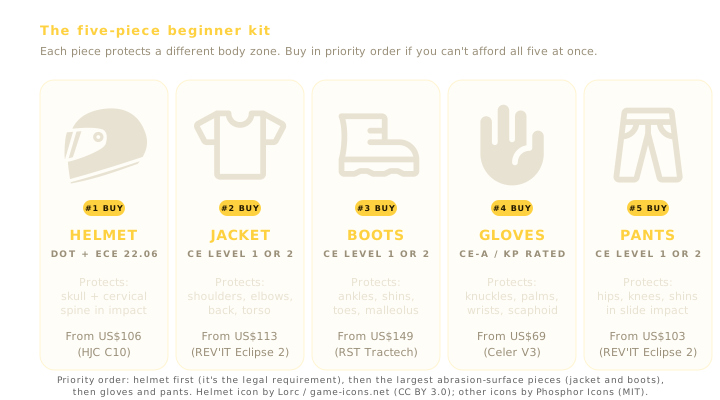
- 01Helmet (highest priority — non-negotiable).The single piece of gear required by law in most jurisdictions and the single piece that prevents the most-severe injuries. A DOT + ECE 22.06 dual-certified helmet from a reputable manufacturer (AGV, HJC, Shoei, Bell, Alpinestars) starts at about US$100 and tops out around US$1,500 — the cert is the same at $100 as at $1,500; what scales is comfort, weight, ventilation, and (sometimes) Snell or FIM secondary certs. See the motorcycle helmet certifications guide for the difference. Get the fit right per the head shapes guide — a $300 helmet that fits is safer than a $1,000 helmet that doesn't.
- 02Jacket (high priority — CE armor at minimum).The largest piece of abrasion-resistant gear on the body. A proper riding jacket has CE-rated armor at the shoulders and elbows, with a pocket for a back protector (sometimes included, sometimes sold separately). Abrasion-resistant fabric — Cordura, Dynamica, leather, or hybrid — keeps the skin attached during a slide. A T-shirt does not. Even at the budget tier, a CE-armored riding jacket is achievable for about US$110.
- 03Boots (high priority — ankle protection is the gap).The ankle is the most-broken joint in motorcycle crashes and street shoes provide zero protection there. A proper motorcycle boot has a stiff shaft above the ankle, oil-resistant rubber sole, toe slider for racing-style boots (or reinforced toe box for touring boots), and CE-Level 1 or 2 ankle armor on the medial and lateral malleolus. Budget moto boots start at about US$130-150 — Half the cost of the same brand's premium boots, with most of the protection.
- 04Gloves (medium priority — palms and knuckles).In most low-side crashes, the hands hit the pavement first. Gloves with knuckle armor, palm sliders, and full-finger leather or hybrid construction prevent road rash and broken fingers. Short-cuff gloves are cheaper (about US$25-80); gauntlet-style gloves with wrist protection are slightly more (US$80-150). For beginners, gauntlet style is the better choice because wrist rotation in a slide is what breaks scaphoid bones.
- 05Pants (medium priority — but the gap most riders skip).Most new riders ride in jeans. The EN 13595 abrasion standard requires Cambridge Abrasion Machine testing at 8 m/s (~18 mph) and sets pass thresholds of 4 seconds for Level 1 high-impact zones and 7 seconds for Level 2. Standard denim fails in under a second under the same test conditions (trade-press measurements around 0.6 s). Meredith et al. (IRCOBI 2016), a peer-reviewed test of 32 garments across 50 materials, found average motorcycle jacket materials survived just 1.5 seconds — already meaningfully better than denim, and CE-Level 2 pants extend that further. The category most beginners skip ('I'll just wear jeans') is the category with the highest cost-of-skipping per dollar of gear. Budget moto pants start at about US$100.
The recommended ~US$900 kit
Five pieces, one balanced kit. Every item is brand-name, in-stock at multiple retailers we track, and chosen to balance protection, comfort, and the kind of all-weather usability a new rider needs. Total lands at US$891 before tax and shipping — well under $1,000.
| Piece | Pick | Lowest US price |
|---|---|---|
| Helmet | AGV K3 (DOT + ECE 22.06, sport-touring) | US$183 |
| Jacket | Alpinestars Andes V4 Drystar (CE armor, all-weather textile) | US$205 |
| Gloves | REV'IT Cayenne 2 (CE-A rated, gauntlet style) | US$124 |
| Pants | Alpinestars Andes V4 Drystar (CE armor, matches jacket) | US$173 |
| Boots | Alpinestars SMX-6 V3 (CE-rated sport-touring) | US$206 |
| Kit total | 5 pieces, complete protection | US$891 |
Why the AGV K3 (US$183): AGV's 2025 update to the long-running K1 S — same sport-touring shell, same DOT + ECE 22.06 dual cert, refreshed liner. Lighter than the budget alternatives and noticeably quieter at highway speeds. Intermediate-oval head shape, which fits the majority of riders.
Why the Alpinestars Andes V4 Drystar jacket (US$205): textile with a Drystar waterproof membrane, CE-Level 2 armor at shoulders and elbows, back-protector pocket (Alpinestars Nucleon back insert sold separately at about US$60 — strongly recommended). The Andes is built for all-day, all-weather commute and touring use — exactly what new riders actually do. Pair with the matching Andes V4 Drystar pants for one consistent shell.
Why the REV'IT Cayenne 2 gloves (US$124): gauntlet-style with proper wrist closure (the scaphoid-bone-protector that short-cuff gloves don't have), CE-A rated knuckle armor, breathable mesh panels for summer riding. REV'IT runs slightly narrower than Alpinestars in glove sizing — see the sizing guide for the EU-to-US conversion.
Why the SMX-6 V3 boots (US$206): Alpinestars' workhorse sport-touring boot since the original SMX-6 launched a decade ago. V3 is the current production with updated ankle armor, shifter pad, and waterproofing. Three years of street-and-track use across thousands of buyer reviews. Reliable fit, durable construction, replacement parts widely available.
Budget kit: getting under US$600
If $900 isn't in the budget, a complete and protective kit is still achievable for US$540 — about 40% cheaper than the recommended kit by trading down the brand prestige but keeping the safety certifications intact. Every piece below carries CE armor and proper certification; the trade-offs are in comfort, weight, finish, and (sometimes) longevity.
| Piece | Budget pick | Lowest US price | Vs. recommended |
|---|---|---|---|
| Helmet | HJC C10 Solid (DOT + ECE 22.06) | US$106 | Saves US$77 |
| Jacket | REV'IT Eclipse 2 jacket (CE armor, light textile) | US$113 | Saves US$92 |
| Gloves | Alpinestars Celer V3 (CE-A rated, short cuff) | US$69 | Saves US$55 |
| Pants | REV'IT Eclipse 2 pants (matches jacket) | US$103 | Saves US$70 |
| Boots | RST Tractech EVO D3O (D3O ankle armor, sport boot) | US$149 | Saves US$57 |
| Kit total | 5 pieces, complete protection | US$540 | Saves US$351 |
What the budget tier gives up. The HJC C10 is heavier than the AGV K3 (about 200g) and noisier at highway speeds — fine for around-town riding, fatiguing on long highway hauls. The REV'IT Eclipse 2 jacket+pants pair is lighter-fabric than the Andes Drystar set — better for hot weather, less weatherproof in rain. The Celer V3 gloves are short-cuff (no wrist gauntlet) — saving US$55 by accepting more wrist-rotation risk in a slide. The RST Tractech EVO D3O boots are a real sport boot at a budget price; the trade-off is slightly less premium materials than the SMX-6 V3, and historically RST sizing runs slightly small (size up half if between).
One free upgrade. If you can find another US$40 of budget, swap the Celer V3 gloves for the REV'IT Cayenne 2 gauntlet (US$124). Wrist protection is the single best return-per-dollar in the budget kit.
Stretch kit: where the extra US$300 buys you something real
If the budget is closer to US$1,200, the stretch column buys real improvements — not marketing-driven. The Shoei RF-1400 helmet is the cluster's gold-standard street helmet (DOT + ECE 22.06 + Snell M2020R triple-cert) and a noticeable step up in comfort and ventilation. The Bogota Pro Drystar jacket is a proper long-distance touring shell with adventure-grade weatherproofing. The TCX RT-Race boots run small-but-true to TCX sizing and have a more confidence-inspiring ankle structure than the SMX-6 V3.
| Piece | Stretch pick | Lowest US price | Vs. recommended |
|---|---|---|---|
| Helmet | Shoei RF-1400 (DOT + ECE 22.06 + Snell M2020R) | US$380 | + US$197 |
| Jacket | Alpinestars Bogota Pro Drystar (touring-grade) | US$278 | + US$73 |
| Gloves | Alpinestars GP Plus R V3 (race-style, CE-A) | US$148 | + US$24 |
| Pants | Klim Outrider (Klim's commuter touring pant) | US$170 | −US$3 |
| Boots | TCX RT-Race (Italian sport-tour, premium) | US$247 | + US$41 |
| Kit total | 5 pieces, premium protection | US$1,223 | + US$332 |
Where the stretch dollars go. US$197 of the US$332 upgrade is the Shoei RF-1400 helmet — Snell M2020R + ECE 22.06 + DOT means the helmet has been tested against three independent standards at higher impact velocities than the budget cert pair. Snell adds 7.75-8.2 m/s flat-anvil testing the budget HJC C10 isn't subjected to. For a rider who plans to do trackdays or commute on highways at 75+ mph, the cert delta is real, not cosmetic. The other US$135 is spread across the Bogota Pro Drystar (more abrasion-resistant fabric), GP Plus R V3 gloves (race-style cuff), and TCX RT-Race boots (better ankle structure). The Klim Outrider pants are roughly cost-neutral with the Andes Drystar — different aesthetic and slightly different cut, no clear safety win either way.
What the armor actually covers
Each piece of gear protects specific body zones. The table below maps the 14 high-risk crash zones to which piece in your kit covers them and what CE rating to look for. Categories where new riders most commonly skip protection are the back, hips, and chest — all of which require either an upgraded jacket or an aftermarket insert.
| Body zone | Protected by | CE / cert standard |
|---|---|---|
| Skull (impact) | Helmet shell + EPS liner | DOT FMVSS 218 + ECE 22.06 |
| Skull (rotation) | ECE 22.06 oblique-anvil test | Built into ECE 22.06 since 2022 |
| Cervical spine | Helmet retention + neck roll | Built into helmet cert |
| Shoulders | Jacket armor | CE Level 1 (basic) or 2 (premium) |
| Elbows | Jacket armor | CE Level 1 or 2 |
| Back (T1–L5) | Back protector (insert) | CE Level 1 or 2 — usually sold separately |
| Chest | Chest protector (insert) | CE Level 1 — usually sold separately |
| Hips | Pants armor | CE Level 1 — often missing on budget pants |
| Knees | Pants armor | CE Level 1 or 2 |
| Shins | Pants + boot shaft overlap | CE Level 1 |
| Ankles (malleolus) | Boot ankle armor | CE Level 2 typical on race / sport boots |
| Toes | Boot toe box / slider | Built into boot construction |
| Wrists | Glove gauntlet + closure | CE Level 1 KP |
| Palms | Glove palm slider | CE-A or KP rating |
| Knuckles | Glove knuckle protector | CE-A or KP rating |
Two gaps to plan for. First, both the recommended and stretch jackets ship with a foam dummy in the back-protector pocket — not an actual CE-rated back protector. Add an Alpinestars Nucleon (about US$60) or D3O Viper Pro (about US$90) for real spine protection. Second, neither the budget nor the recommended pants ship with hip armor at all (Alpinestars charges about US$25 extra for the Bionic Plus inserts). Both gaps are small dollars to close and large risk to leave open.
Sizing across the kit
Each brand sizes slightly differently — Alpinestars race-cut runs slim, REV'IT runs narrow in the shoulders + long in the torso, AGV helmets fit intermediate-oval heads. The motorcycle gear sizing guide has per-brand conversion tables for jackets, gloves, boots, and helmets. The TL;DR for cross-region buyers: EU jacket size ≈ US − 10 as a starting formula, but the brand chart overrides the formula (Klim's S maps to EU 50, not EU 48 like Alpinestars). For helmets, head circumference in cm is the truth — letter sizes vary by brand.
Three sizing notes specific to the kit:
- 01Jacket and pants from the same brand are designed to zip together.Alpinestars Andes V4 jacket + Andes V4 pants share a kidney-belt zipper; same applies to the REV'IT Eclipse 2 set. Mixing brands at the jacket/pants junction leaves a gap. If you mix, get a zipper extender (about US$10) or a kidney belt to close the gap.
- 02Gloves are the one item where sizing DOWN is correct.Gloves stretch with wear. A snug glove at purchase becomes a comfortable glove after 10 hours of riding. A loose glove at purchase becomes a sloppy glove that catches on bar controls. If you're between sizes, go down.
- 03Boots are sized for thin socks, not winter socks.Buy boots to fit the socks you'll wear most often (typically thin liner socks for sport-touring boots). Buying boots a half-size too large to fit winter socks means the boot moves on your foot during summer riding — which is most of the time. Solution: buy for thin socks, wear two pairs of thin socks in winter rather than one thick pair.
Things you don't need yet
Three categories of gear that get marketed hard to new riders but aren't necessary for the first kit. Get the basics first; add these later if and when you actually need them.
- 01Airbag vests (Tech-Air, D-Air, In&Motion).US$700-1,300 add-on that inflates a CE-rated airbag around the torso in a crash. Real safety upgrade, but only after the base kit is complete. The CE-Level 2 back protector that costs US$60 catches roughly 80% of the risk an airbag vest catches; the airbag adds the last 20% plus chest coverage. Get one if you're doing trackdays or racing. Don't get one before you have boots.
- 02US$1,000+ helmets.Helmets in the US$800-1,500 range (Shoei X-Fifteen, Arai Corsair-X, Alpinestars S-R10, AGV Pista GP RR) add Snell M2020 and/or FIM FRHPhe-02 certifications on top of DOT + ECE 22.06. The cert delta is real for racing; for street riding it's mostly comfort, weight, and aerodynamics. A US$180 AGV K3 protects your head adequately. The US$800 upgrade is a quality-of-life decision, not a safety necessity. See the helmet certifications guide for the cert details.
- 03Race leathers (1-piece or 2-piece zip-together suits).Leather race suits (Alpinestars Atem V5 / GP Plus R, Dainese Misano, etc.) start at about US$500 for the jacket alone and rise quickly. They're built for trackday wear: high abrasion resistance, aero hump, perforated panels. For street riding, a textile jacket like the Andes Drystar provides equivalent CE armor with much better weather versatility (textile doesn't absorb rain the way leather does, doesn't get hot the way leather does in summer traffic). Buy race leathers if and when you actually start doing trackdays.
The one upgrade worth planning for: a Bluetooth intercom, if and only if you'll be riding with other people. An intercom is the natural addition once the base kit is complete — not a safety requirement, but a quality-of-life upgrade for group rides. The brand decision matters because Cardo and Sena's mesh networks don't talk to each other; see the Cardo vs Sena 2026 intercom guide for the playbook (US$140–500 depending on tier).
The 5-step buying sequence (if you can't afford the whole kit at once)
- 01Step 1: helmet (US$100-200 minimum).The single piece you cannot legally ride without in most jurisdictions, and the single piece that prevents the most-severe injuries. Buy a brand-name DOT + ECE 22.06 dual-certified helmet (HJC C10, AGV K3, Bell Eliminator) before anything else. If your current ride is borrowed gear, the helmet is the first piece to own outright.
- 02Step 2: jacket (US$100-250).Largest surface area of abrasion-resistant fabric. Get a CE-armored riding jacket (REV'IT Eclipse 2, Alpinestars Andes V4 Drystar) before any other body protection. T-shirt + helmet is a worse combo than helmet + jacket without pants.
- 03Step 3: boots (US$130-200).Ankle protection is the gap that street shoes don't cover. Buy proper moto boots (RST Tractech EVO, Alpinestars SMX-6 V3) before pants or gloves — the ankle is more fragile than the knee or the palm in most crashes, and street shoes provide no protection there.
- 04Step 4: gloves (US$60-130).Hands hit the pavement first in most low-side crashes. Buy a CE-A rated glove with knuckle armor and palm slider (Alpinestars Celer V3 for short-cuff budget, REV'IT Cayenne 2 for gauntlet recommended). Don't skip the gauntlet style if you can afford it — wrist rotation is what breaks scaphoid bones.
- 05Step 5: pants (US$100-200).The most-skipped category. Jeans alone fail in under a second under the EN 13595 abrasion standard's 8 m/s test; CE-rated moto pants (REV'IT Eclipse 2, Alpinestars Andes V4 Drystar, Kevlar-lined denim) hit Level 1 (4 s) or Level 2 (7 s) at the same test speed. By the time you get to step 5 you've spent US$400-700; budgeting US$100-200 for pants closes the final gap.
Common questions
Is a US$540 budget kit actually safe?
Why is the recommended kit US$891 and not exactly US$1,000?
Can I skip the pants and just ride in jeans?
Should I buy used gear to save money?
How does cross-border buying change the math?
Do I need waterproof gear?
What about a back protector — is it really necessary?
Why are the AGV K3 and the Bell Eliminator both in the same price range — which is better?
What ALLR does about it
Every product linked in this article has a live ALLR product page with cross-retailer pricing for your country. The 'lowest US price' columns in the tables above are the current best landed price we track — including duty and VAT calculations where applicable. Prices update twice daily as our scrapers re-pull retailer catalogs. Click through any link to see all retailers carrying that exact product, sorted by landed price for your buyer country.
Two limits worth flagging. (1) Stock fluctuates — the cheapest retailer one week might not have inventory the next; we filter to in-stock-for-your-country on every PDP, but a price you see today may not match a price you see in a week. (2) The recommended kit's three Alpinestars items (Andes V4 jacket, Andes V4 pants, SMX-6 V3 boots) are co-branded enough that some buyers will want to mix brands for visual variety; the REV'IT Eclipse 2 (jacket+pants) or Klim (Dakar jacket + Outrider pants) sets work equally well at a similar price point if you'd rather not look like an Alpinestars billboard.
We at ALLR exist because motorcycle gear is one of the few large categories where cross-retailer pricing isn't surfaced anywhere. The same Alpinestars Andes V4 jacket sells for US$205 at one retailer and US$280 at another; we surface the difference so beginners don't pay the premium for not knowing where to look. Every link in this article is a starting point — find the size, find the colorway, find the retailer with stock for your country, and the kit comes together for the budget you have.
This guide is part of the motorcycle gear buying playbook — the hub is the canonical sequence across all topic-deep guides.